China Airlines Cargo (Prefix 297): A Freight Forwarder's Guide
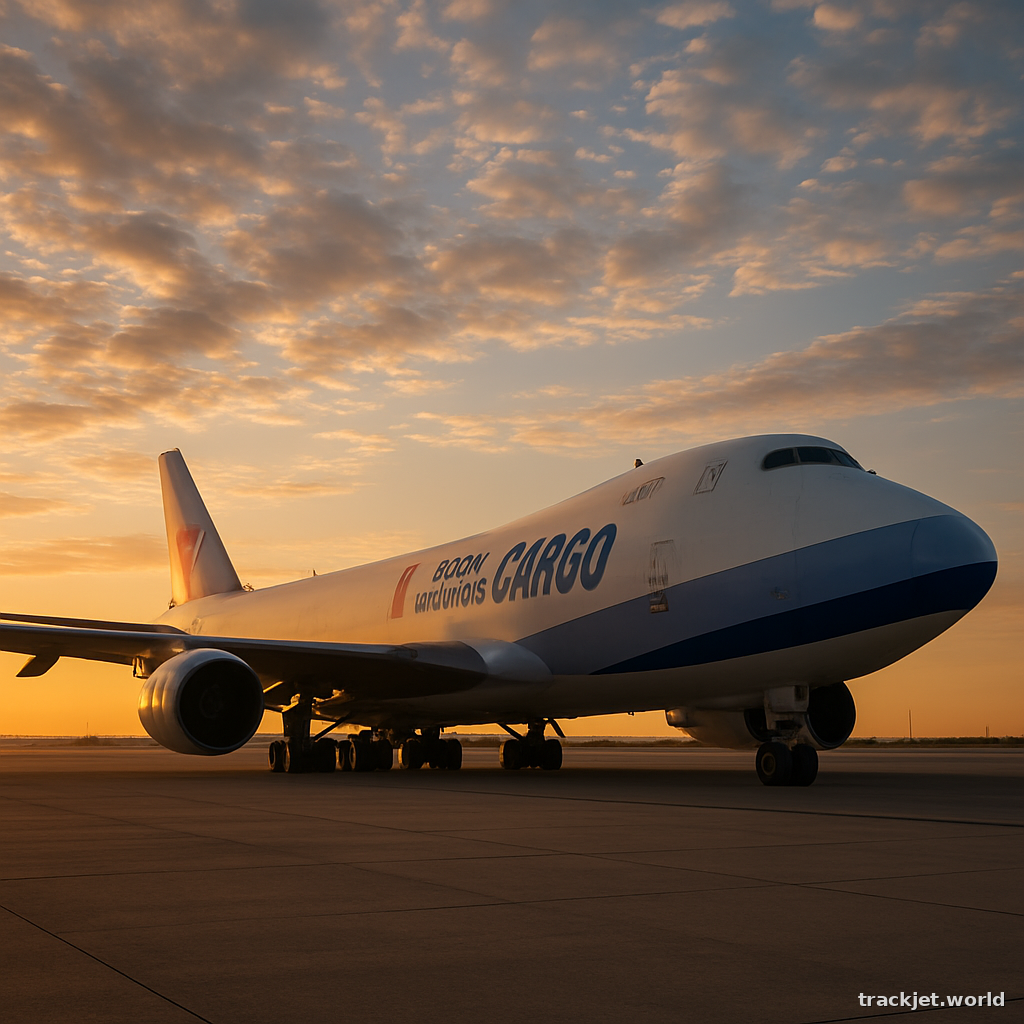
China Airlines Cargo (Prefix 297): A Freight Forwarder's Guide
China Airlines Cargo is the dedicated air-freight division of China Airlines, Taiwan's flag carrier, and one of the most recognisable names in trans-Pacific and Asia-Europe cargo lanes. For freight forwarders routing time-sensitive or high-value goods through East Asia, understanding how this carrier positions itself — its hubs, commodity strengths, alliance relationships, and environmental commitments — is essential groundwork before booking a MAWB in the 297 series.
Market Positioning
China Airlines Cargo occupies a well-established mid-to-large-tier position in the Asia-Pacific air-freight market. The carrier competes on the strength of its Taiwan gateway, which sits at a strategically advantageous crossroads between Northeast Asia (Japan, South Korea), Southeast Asia, and long-haul markets in North America and Europe. For forwarders, this translates into competitive transit times on lanes that often require a reliable regional connecting point.
The carrier operates a dedicated freighter fleet alongside belly-hold capacity on passenger services — a dual-channel model that gives forwarders flexibility when booking space, particularly during periods when passenger schedules fluctuate. As of recent disclosures, the freighter fleet includes Boeing 777F aircraft, which offer substantial main-deck capacity and the range required for non-stop or limited-stop intercontinental services.
Main Hubs and Network
Taiwan Taoyuan International Airport (TPE) is the carrier's primary hub and the nerve centre of its cargo operations. Taoyuan is one of Asia's busier cargo airports, and China Airlines Cargo's home-hub advantage means forwarders can expect competitive frequency and ground-handling familiarity at that point of origin or transfer.
Beyond Taoyuan, the carrier maintains meaningful operations at key gateways across its network. As of recent schedules, trans-Pacific services connect Taiwan with major North American freight hubs, while Europe-bound freighters serve demand for Taiwanese technology exports. Intra-Asia connectivity — covering points in Japan, South Korea, Southeast Asia, and greater China — rounds out a network that lets forwarders build multi-leg solutions with a single carrier relationship.
Cargo Specialisations
China Airlines Cargo has built particular expertise in several commodity verticals that align closely with Taiwan's industrial and export profile:
- Electronics and semiconductors — Taiwan is a global leader in semiconductor manufacturing, and the carrier has developed handling protocols, temperature-controlled storage options, and security procedures suited to high-value, time-critical tech shipments.
- Perishables — Fresh produce, cut flowers, and seafood move regularly on the network, supported by cool-chain infrastructure at Taoyuan and partner facilities at outstations.
- Pharmaceuticals and life sciences — As GDP-pharma and temperature-sensitive healthcare cargo have grown in importance industry-wide, China Airlines Cargo has invested in handling capabilities aligned with IATA's CEIV Pharma standards (widely reported as a focus area for the carrier).
- E-commerce — Cross-border e-commerce volumes from Taiwan and broader Asia have driven demand for rapid, traceable small-package solutions, an area where the carrier has been developing its product offering.
- General manufacturing goods — Machinery parts, automotive components, and consumer goods fill out the general cargo mix on both freighter main decks and belly holds.
Forwarders handling any of these commodity types should engage China Airlines Cargo's cargo sales teams early to confirm specific product availability, documentation requirements, and any outstation handling limitations.
Partnerships and Interline Relationships
China Airlines Cargo participates in the SkyTeam Cargo alliance, the freight arm of the SkyTeam airline grouping. Membership provides forwarders with access to a broader interline network, meaning shipments can move beyond points China Airlines Cargo serves directly, with a degree of coordination on booking, documentation, and liability across participating carriers.
Alliance membership also signals a level of operational standardisation that matters to forwarders managing global accounts — common data exchange formats, shared safety audits, and coordinated product definitions reduce friction when building multi-carrier routings.
Beyond the alliance, the carrier maintains bilateral interline and special prorate agreements with a range of regional and global airlines, though forwarders should verify current agreement status with their local cargo sales representative, as commercial arrangements evolve.
Sustainability Commitments
Sustainability has become a material factor in carrier selection, particularly for forwarders whose shipper clients have Scope 3 emissions reporting obligations. China Airlines Cargo's parent group has publicly articulated commitments to reducing carbon intensity and exploring sustainable aviation fuel (SAF) adoption, in line with industry-wide trajectories set by IATA's net-zero 2050 target.
As of recent public reporting, the carrier has been involved in SAF trials and discussions with fuel suppliers and airport operators at Taoyuan. The Boeing 777F aircraft type in the freighter fleet offers relatively favourable fuel efficiency characteristics compared with older widebody freighter types, which is a relevant data point for forwarders calculating emissions estimates.
Forwarders whose clients require emissions reporting or SAF certificates should raise this directly with China Airlines Cargo's commercial teams, as the availability of verified SAF uplift and associated documentation can vary by route and booking period.
Practical Tips for Freight Forwarders
Working effectively with China Airlines Cargo involves a few operational habits worth embedding in your workflow:
- Book early on high-demand lanes. Trans-Pacific and Asia-Europe freighter capacity can tighten quickly around major Taiwanese export cycles — semiconductor product launches, consumer electronics peak seasons, and Lunar New Year pre-shipment surges are predictable pressure points.
- Confirm commodity acceptance in advance. For pharma, dangerous goods, and live animals, pre-acceptance confirmation and documentation review should happen well before cargo arrives at the terminal.
- Use the 297 prefix correctly. All MAWBs issued against China Airlines Cargo will carry the 297 prefix. Ensure your system is capturing this accurately to avoid misdirected tracking queries or invoicing errors.
- Engage local cargo sales. The carrier's regional sales teams often have visibility into capacity availability and promotional rates that are not always reflected in online booking platforms.
Tracking China Airlines Cargo Shipments
Once your shipment is moving, staying on top of its status is straightforward. Simply paste your 11-digit Master Air Waybill number — beginning with 297 — into trackjet.world and TrackJet will route your query directly to China Airlines Cargo's official tracking page, returning the most current status data available from the carrier's own systems. TrackJet is a free service requiring no registration, making it a practical tool for forwarders who need quick, reliable MAWB status checks across multiple carriers without toggling between individual airline portals.
Related tools
To track a China Airlines Cargo air waybill (prefix 297), paste it into the universal tracker — it detects the format and routes you to the official tracking surface — or open the China Airlines Cargo entry in our directory. If you handle MAWBs daily, the MAWB format guide explains the airline prefix and the mod-7 check digit with worked examples.
Updated 2026-09-05